Unseen Realities

AI turns your shadow into something else—blurring the line between your body, others, and how machines choose to see you.

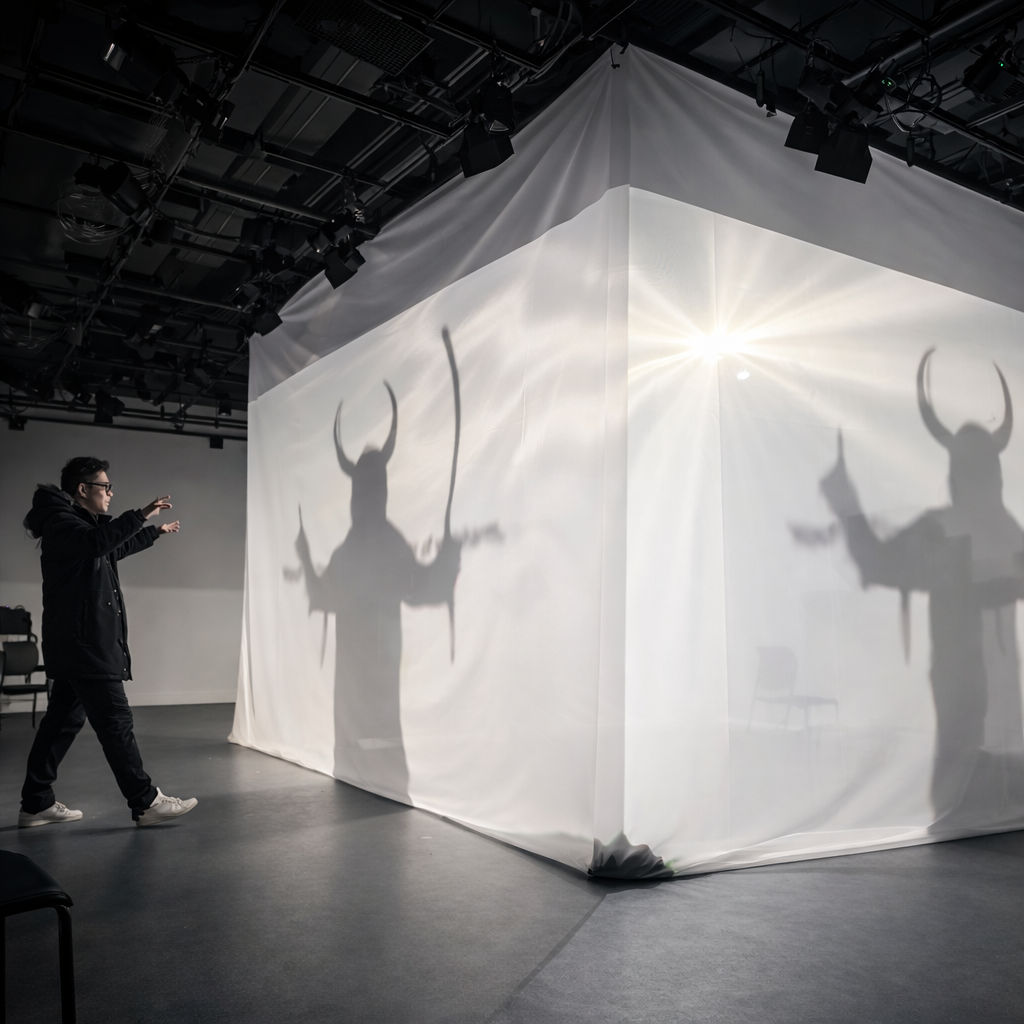
Unseen Realities - Key Visual

Overview

Unseen Realities is an interactive installation that reinterprets human presence through AI-generated shadows. Visitors’ silhouettes are captured and transformed in real time, producing alternative shadow forms that are projected onto a fabric screen. Instead of mirroring the body, the system generates a parallel visual identity—one that exists between recognition and abstraction.

Role

Conceptor & Technical Lead

Team

Kyungmin Kim, Yanchen Shen, Joshua Teo

Institution / Year

MIT - Music Theater Arts 2025

Tools

TouchDesigner

Background

Shadows are traditionally understood as direct extensions of the body—faithful projections of physical form. However, with the introduction of machine perception, this relationship becomes unstable. AI systems do not simply replicate what they see; they reinterpret, distort, and recombine it. This project emerges from questioning how human presence is altered when filtered through computational vision, and what it means to encounter a version of oneself generated by a machine.

Unseen Realities - image2

Concept

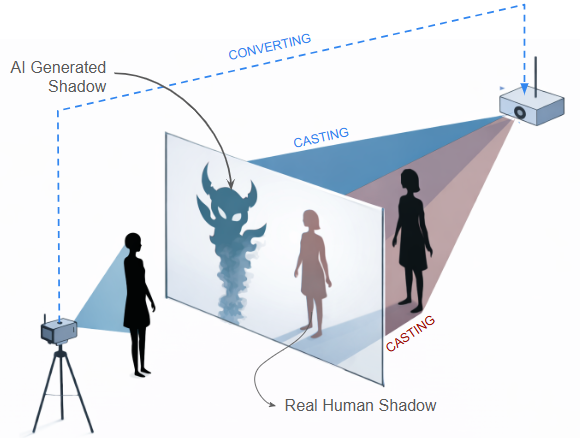
The installation stages a dual-layer interaction between real and artificial shadows. As participants move, their silhouettes are captured and reimagined by AI, producing unexpected distortions or hybrid forms—especially when multiple bodies or objects intersect. At the same time, from the opposite side of the fabric, another participant can cast a real shadow onto the same surface. This creates a shared space where human and AI-generated presences coexist and interact, blurring the boundary between original and interpretation. The shadow becomes a site of negotiation between physical reality and machine imagination.

Unseen Realities - Conceptual diagram

The Project

Unseen Realities is an interactive installation that reinterprets human presence through AI-generated shadows. Visitors’ silhouettes are captured and transformed in real time, producing alternative shadow forms that are projected onto a fabric screen. Instead of mirroring the body, the system generates a parallel visual identity—one that exists between recognition and abstraction.

Process

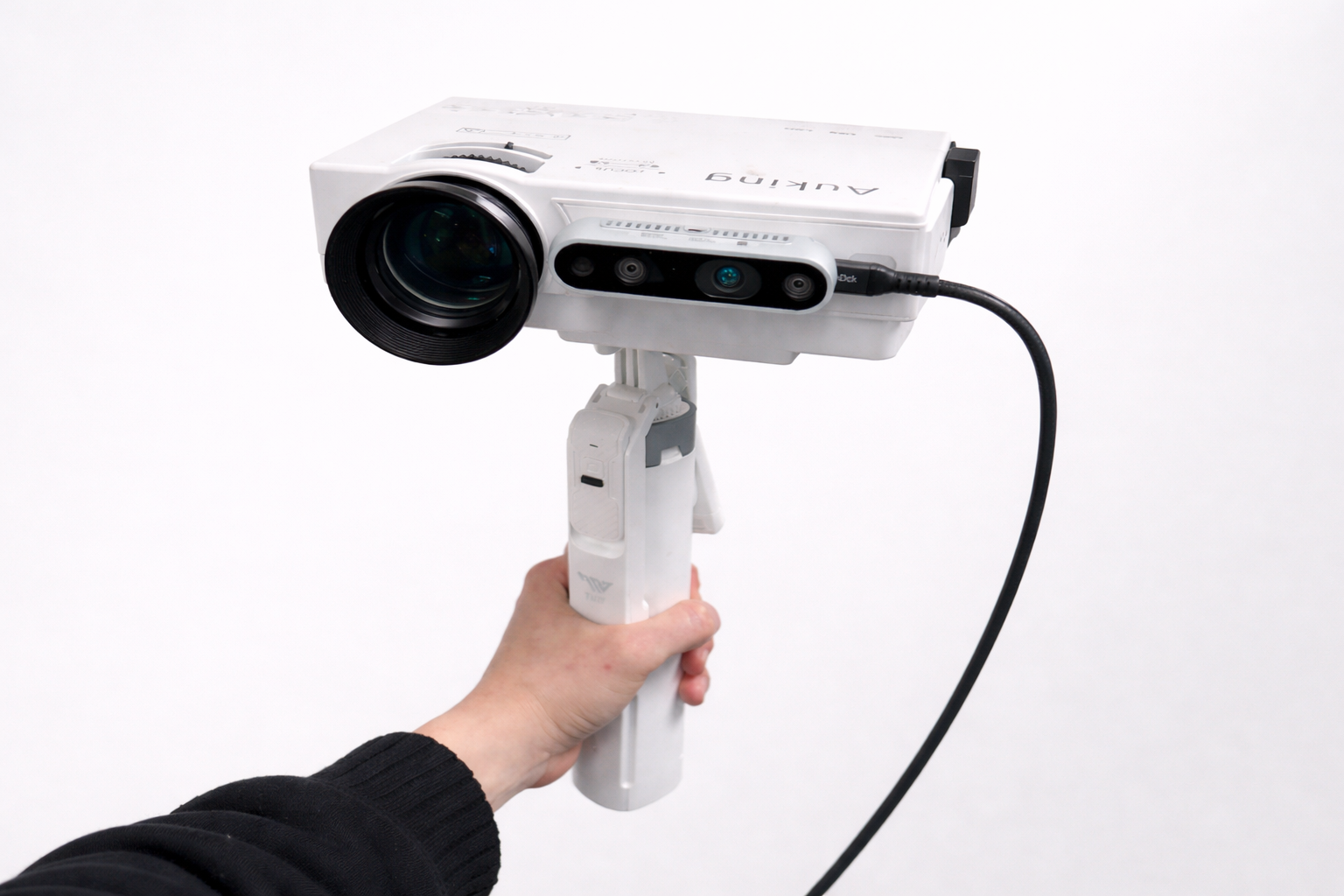
The system combines real-time silhouette capture with AI-based image generation and projection mapping onto a semi-transparent fabric screen. Computer vision techniques are used to detect and isolate human forms, which are then processed through generative models to produce alternative shadow representations. The output is projected back onto the fabric, aligned with the participants’ positions to maintain spatial coherence. Iterations focused on latency reduction, alignment accuracy, and the behavior of generated forms—particularly how they merge, distort, and respond to multiple inputs—resulting in a responsive and immersive interaction environment.

Documentation

Media Carousel

1 / 3

2 / 3

3 / 3

Slide 1 of 3